
Elysia crispata - Frilly Slug images
Elysia crispata - Frilly Slug
Price:
€49.00
Tax included
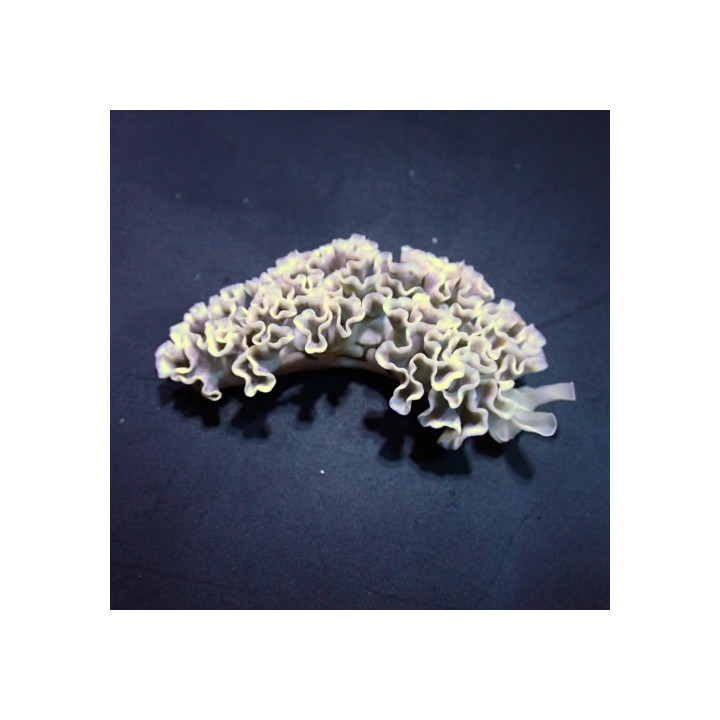
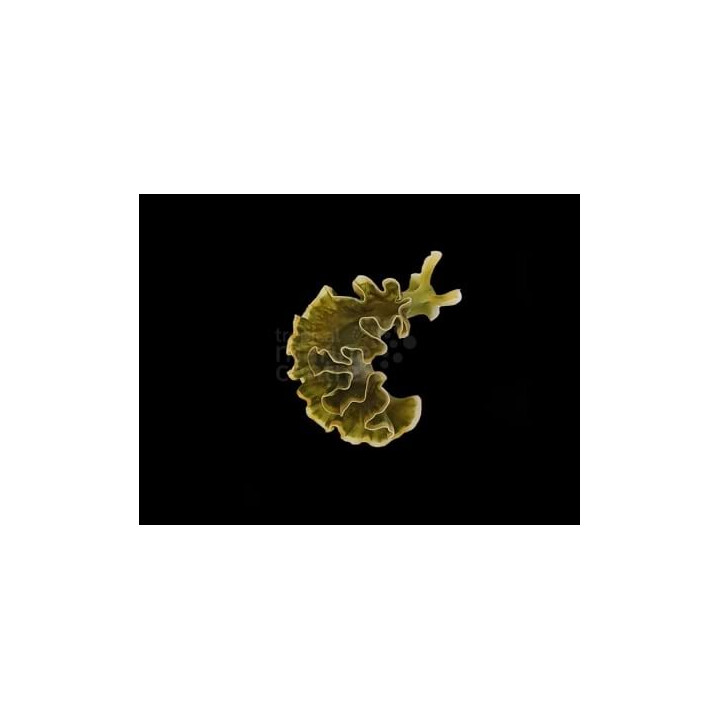
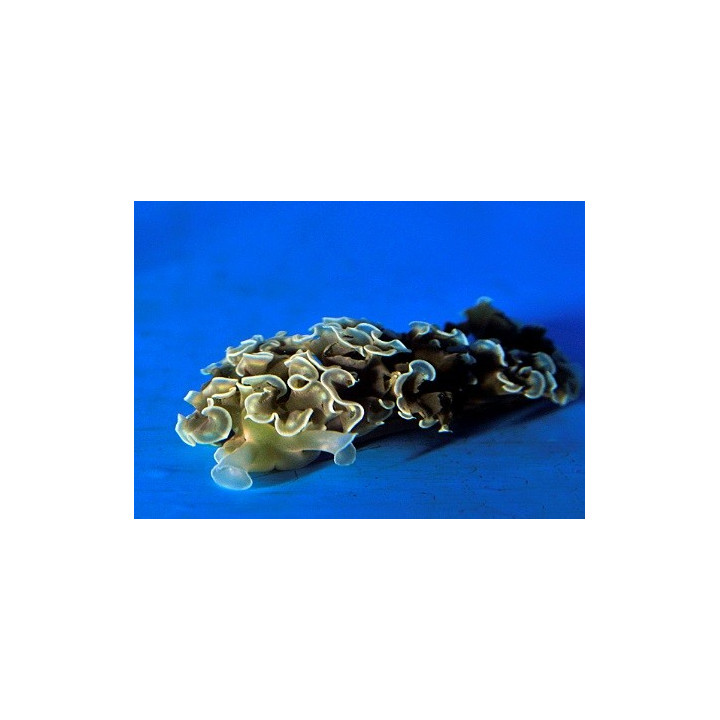
Elysia crispata, commonly known as the Frilly Slug or Lettuce Sea Slug, is a striking Caribbean sacoglossan with strongly folded, leaf-like parapodia. Individuals occur in green, blue, white and brown colour forms. The animal grazes selected green algae and retains functional chloroplasts from its food inside its own tissues—a process known as kleptoplasty. Light can supplement its energy supply, but it does not replace the need for suitable living algae. This species requires an established marine aquarium, stable water conditions, protected pump intakes and a continuous supply of algae accepted by the individual.
The folded parapodia give Elysia crispata its characteristic lettuce-like appearance. The colour and pattern vary considerably between individuals and may change according to diet, retained chloroplasts, lighting and health.
Although peaceful and generally reef safe, the species is not a simple clean-up-crew animal. Its long-term survival depends mainly on continuous access to the correct food algae.
Key features
- Distinctive frilled marine sea slug
- Scientific name: Elysia crispata
- Common names: Frilly Slug and Lettuce Sea Slug
- Family: Plakobranchidae
- Native to the Caribbean and western Atlantic
- Strongly folded leaf-like parapodia
- Green, white, blue or brown-patterned colour forms
- Retains functional chloroplasts from consumed algae
- Uses kleptoplasty for supplementary energy production
- Requires both suitable lighting and living food algae
- Feeds on selected green algae
- May consume Bryopsis-type algae
- Does not necessarily accept every hair-algae species
- Not a guaranteed solution for algae problems
- Completely peaceful
- Generally reef safe
- Does not normally consume corals
- Requires an established marine aquarium
- Sensitive to copper and medications
- Must be protected from pump intakes
- Aquarium must be escape resistant
- Intermediate-to-advanced care level
Care information
- Adult size: commonly approximately 4–7 cm
- Diet: selected green algae
- Energy supplementation: photosynthesis by retained chloroplasts
- Temperament: peaceful
- Reef compatibility: generally reef safe
- Care level: intermediate to advanced
- Origin: Caribbean, Florida, Bahamas and western Atlantic
- Recommended minimum aquarium volume: approximately 75 litres
Suggested water conditions
- Temperature: approximately 24–28 °C
- Specific gravity: approximately 1.023–1.026
- pH: approximately 8.1–8.4
- Alkalinity: approximately 7–12 dKH
- Calcium: approximately 400–450 mg/l
- Magnesium: approximately 1,250–1,400 mg/l
- Ammonia: 0 mg/l
- Nitrite: 0 mg/l
- Flow: moderate and indirect
- Lighting: moderate
- Oxygenation: high
Feeding
Confirm which algae the individual is currently eating before purchase. Place the slug directly onto rock carrying the same or another known acceptable green alga.
Lighting and stolen chloroplasts cannot sustain the animal indefinitely without food. Nori, ordinary algae wafers, phytoplankton and standard aquarium foods may not provide an adequate substitute.
Introduction
- Confirm that suitable living food algae are available.
- Protect all pump and overflow intakes.
- Install an escape-resistant aquarium cover.
- Dim the aquarium lighting.
- Equalise the transport-water temperature.
- Acclimate gradually to salinity and water chemistry.
- Avoid unnecessary exposure to air.
- Do not handle the animal with bare hands.
- Transfer it underwater in a small container.
- Place it directly on algae-covered rock.
- Temporarily reduce strong water flow.
- Confirm that the animal attaches to the substrate.
- Monitor feeding, coloration and body condition closely.
- Avoid all copper-based medications.
-
ReferenceINT0262
 Suojauskäytännöt
(muokkaa moduulissa Asiakkaan vakuuttaminen)
 Toimituskäytäntö
Fast shipping
 Palautuskäytäntö
Warranty quaranteed
12 other products in the same category



Pentagonaster dubeni - Australian Biscuit Starfish - Orange
€178.00
Rated out of 5 stars based on
review(s)

Comments (0)
Your review appreciation cannot be sent
Report comment
Report sent
Your report cannot be sent