
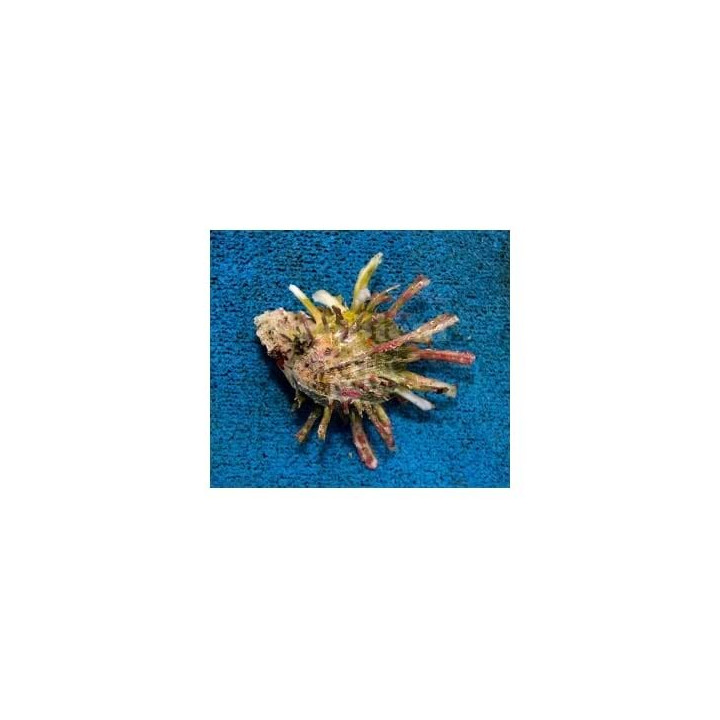
Spondylus spp. - Spiny Oyster images
Spondylus spp. - Spiny Oyster
Price:
€118.00
Tax included
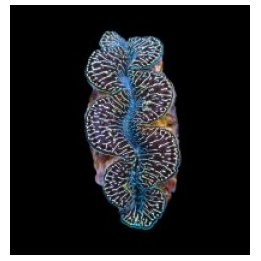
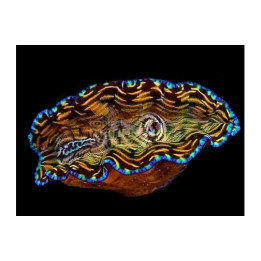
Spondylus spp., commonly known as the Spiny Oyster or Thorny Oyster, is a striking bivalve with a strongly ridged or spiny shell and a colourful mantle edge. This peaceful animal attaches permanently to hard substrate and filters phytoplankton, fine zooplankton, bacteria and suspended organic particles from the water. It requires continuous moderate-to-strong flow, regular plankton feeding and stable marine-water conditions.
The product is identified as Spondylus spp., meaning that the exact species may vary. Spiny oysters belong to the family Spondylidae and are more closely related to scallops than to true oysters.
Shell colour and structure vary naturally. Depending on the species, the shell may be red, orange, purple, brown or multicoloured and may carry short projections, prominent ridges or long spines.
Adults attach permanently to reef rock or another hard surface. Once the animal has secured itself, it should not be forcefully removed or relocated.
Key features
- Decorative spiny marine bivalve
- Scientific identification: Spondylus spp.
- Common names: Spiny Oyster and Thorny Oyster
- More closely related to scallops than true oysters
- Plankton-filtering invertebrate
- Consumes phytoplankton and microscopic food particles
- Colourful mantle edge
- Small sensory eyes around the mantle
- Permanently attaches to hard substrate
- Ornate ridged or spiny shell
- Completely peaceful
- Reef safe
- Does not harm corals
- Requires regular plankton feeding
- Requires moderate-to-strong water flow
- Does not require intense lighting
- Requires stable calcium, magnesium and alkalinity
- Sensitive to copper and medications
- Suitable only for established marine aquariums
- Exact species, size and colour may vary
Care information
- Scientific identification: Spondylus spp.
- Family: Spondylidae
- Adult size: approximately 8–20 cm, depending on species
- Diet: phytoplankton, fine zooplankton and suspended organic particles
- Feeding method: filter feeder
- Movement: permanently attached as an adult
- Temperament: peaceful
- Reef compatibility: reef safe
- Care level: intermediate to advanced
- Lighting: low to moderate
- Flow: moderate to strong
- Recommended minimum aquarium volume: approximately 100 litres
Suggested water conditions
- Temperature: approximately 23–27 °C
- Specific gravity: approximately 1.023–1.026
- pH: approximately 8.1–8.4
- Alkalinity: approximately 8–12 dKH
- Calcium: approximately 400–450 mg/l
- Magnesium: approximately 1,250–1,400 mg/l
- Ammonia: 0 mg/l
- Nitrite: 0 mg/l
- Oxygenation: high
Feeding
Offer a varied combination of:
- Live phytoplankton
- Liquid microalgae foods
- Rotifers
- Copepod nauplii
- Fine zooplankton
- Specialised suspension-feeder foods
Feed small amounts daily or several times weekly. Introduce the food upstream so the current carries particles to the oyster. Avoid forcing concentrated food directly into the open mantle.
Introduction
- Confirm that the aquarium is fully established.
- Select a stable location with continuous indirect flow.
- Check compatibility with fish and crustaceans.
- Acclimate slowly to temperature and salinity.
- Handle the shell carefully and avoid its sharp projections.
- Never place fingers between the open valves.
- Transfer the animal underwater whenever possible.
- Position it upright on stable rock.
- Do not bury the shell in sand.
- Leave adequate space for the valves to open.
- Direct broad moderate flow past the animal.
- Offer a small plankton feeding after it opens.
- Monitor mantle extension and feeding response.
- Avoid copper-based medications.
-
ReferenceINT0298
 Suojauskäytännöt
(muokkaa moduulissa Asiakkaan vakuuttaminen)
 Toimituskäytäntö
Fast shipping
 Palautuskäytäntö
Warranty quaranteed
12 other products in the same category



Viewed products

Comments (0)
Your review appreciation cannot be sent
Report comment
Report sent
Your report cannot be sent