
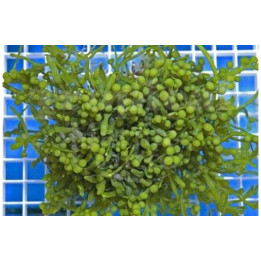

Murex spp. - Murex images
Murex spp. - Murex
Price:
€65.00
Tax included
Murex spp. is a trade designation for predatory marine snails belonging to the Muricidae family. Their ornate shells may have prominent ridges, fronds and long spines, with shape, colour and adult size varying between species. Murex snails prey on other invertebrates, particularly marine snails and bivalves. They are not algae grazers, conventional clean-up-crew animals or reliably reef safe. These snails are most appropriate for established species aquariums or fish-only marine systems maintained by experienced aquarists.
The designation Murex spp. means that the exact species has not been determined. Aquarium-trade specimens may belong to the true genus Murex or to related Muricidae genera such as Chicoreus, Hexaplex, Phyllonotus or Vokesimurex.
Because no exact species is specified, adult size, preferred prey and temperature requirements may vary considerably. Shell colour, sculpture, spine length and overall appearance also vary naturally.
Key features
- Ornate spiny marine snail
- Sold as Murex spp.
- Belongs to the Muricidae family
- Exact species may vary
- Carnivorous and actively predatory
- Preys on marine snails and bivalves
- May consume tubeworms and other invertebrates
- Does not graze algae
- Not a conventional clean-up-crew animal
- Reef safe only with extreme caution
- May overturn unsecured coral fragments
- Often active at dusk or during the night
- Requires regular animal-based foods
- Requires an established marine aquarium
- Sensitive to copper-based medications
- Shell shape, colour and adult size vary
- Recommended for experienced marine aquarists
Care information
- Scientific identification: Murex spp.
- Family: Muricidae
- Adult size: approximately 3–30 cm, depending on species
- Diet: living invertebrates and supplemental animal-based foods
- Activity: commonly nocturnal
- Temperament: predatory
- Reef compatibility: not recommended for conventional reef aquariums
- Care level: intermediate to advanced
- Origin: tropical, subtropical or temperate seas, depending on species
Suggested conditions for a tropical specimen
- Temperature: approximately 23–27 °C
- Specific gravity: approximately 1.023–1.026
- pH: approximately 8.1–8.4
- Alkalinity: approximately 8–12 dKH
- Calcium: approximately 400–450 mg/l
- Magnesium: approximately 1,250–1,400 mg/l
- Ammonia: 0 mg/l
- Nitrite: 0 mg/l
- Flow: low to moderate
- Oxygenation: high
These values must not be applied automatically to an unidentified temperate or cool-water species.
Feeding
Offer suitable animal-based food two or three times weekly:
- Mussel in the shell
- Chopped mussel meat
- Shrimp meat
- Krill
- Squid
- Marine fish
- Mysis shrimp
- Sinking carnivore pellets
Feed after the aquarium lighting dims. Remove uneaten food before it decomposes.
Introduction
- Determine the species and previous holding temperature whenever possible.
- Confirm that the aquarium is appropriate for a predatory snail.
- Remove vulnerable snails, bivalves and other prey animals.
- Acclimate slowly to temperature and salinity.
- Do not pull the animal from the transport container.
- Wear protective gloves when handling a sharply spined shell.
- Transfer the snail underwater in a small container.
- Place it on stable sand or open rockwork.
- Confirm that it is upright and able to attach.
- Keep the lighting reduced for the remainder of the day.
- Offer a small animal-based meal after the snail becomes active.
- Avoid all copper-based medications.
-
ReferenceINT0246
 Suojauskäytännöt
(muokkaa moduulissa Asiakkaan vakuuttaminen)
 Toimituskäytäntö
Fast shipping
 Palautuskäytäntö
Warranty quaranteed
12 other products in the same category



Viewed products
Comments (0)
Your review appreciation cannot be sent
Report comment
Report sent
Your report cannot be sent