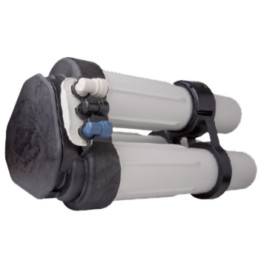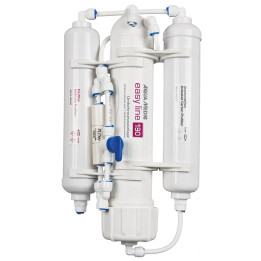
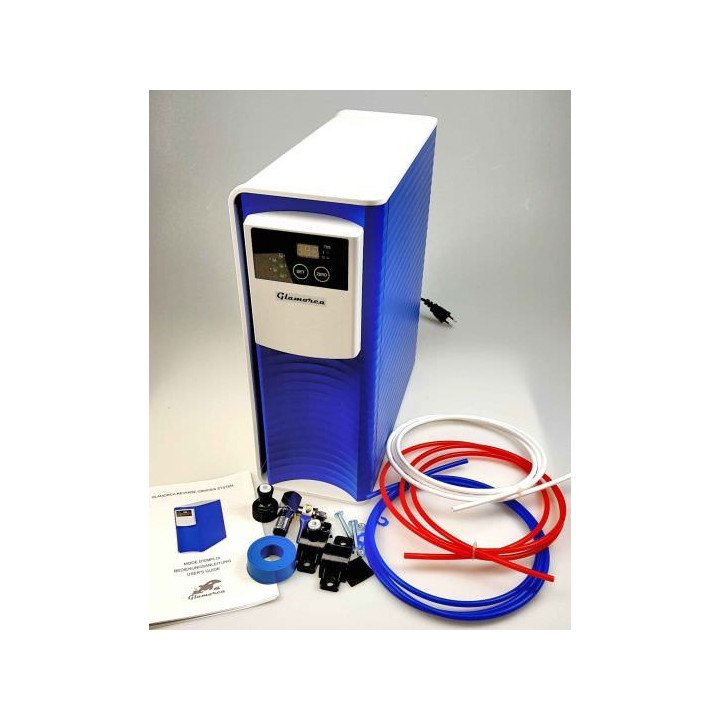
Glamorca RO1 Reverse Osmosis System images
Glamorca RO1 Reverse Osmosis System
Price:
€349.90
Tax included
Glamorca Reverse Osmosis RO1 is a compact five-stage RO/DI system for producing highly purified water for marine, reef and freshwater aquariums. Its integrated deionisation cartridge removes residual silicates, nitrates and other dissolved ions after the RO membrane, allowing the product-water TDS to reach close to zero or 0 ppm. An LCD displays TDS in real time, LED indicators assist with filter maintenance, and an integrated leak sensor stops the system when water is detected. Maximum production is approximately 380 litres per day under optimal conditions.
The Glamorca RO1 purifies cold tap water through sediment filtration, two activated-carbon stages, a reverse-osmosis membrane and a final deionisation cartridge.
The system is particularly suitable for reef aquariums requiring consistent, low-contaminant source water for salt mixing and evaporation replacement. It can also be used for freshwater aquariums when the purified water is remineralised to the requirements of the livestock.
Key features
- Compact five-stage RO/DI system
- Suitable for marine and reef aquariums
- Suitable for freshwater aquariums
- 5-micron sediment filtration
- Activated-carbon filtration
- Carbon-block filtration
- Reverse-osmosis membrane
- Integrated deionisation cartridge
- Retention rate above 99% under optimal conditions
- Product-water TDS close to zero or 0 ppm
- Real-time LCD TDS display
- LED filter-replacement indicators
- Quick twist-lock cartridges
- Integrated water-leak sensor
- Audible alarm and automatic shutdown
- Maximum output approximately 380 litres per day
- Width approximately 15 cm
- Filters and membrane supplied installed
- Installation tubing and fittings included
- EAN: 4025167885006 [maxspect.co.uk], [pumpflowaquarium.com]
Filtration stages
- 5-micron sediment cartridge
- Activated-carbon cartridge
- Carbon-block cartridge
- Reverse-osmosis membrane
- Deionisation cartridge
The final DI stage removes residual ions that may pass through the RO membrane, helping produce water suitable for demanding reef aquariums.
Package contents
- Glamorca RO1 system
- Installed filter cartridges
- Installed RO membrane
- Integrated DI cartridge
- PTFE sealing tape
- 1/4″ to 3/4″ water connection
- Feed-water adapter
- Ball valve
- Drain clamp
- Approximately 2 m of red tubing
- Approximately 2 m of blue tubing
- Approximately 2 m of white tubing [maxspect.co.uk], [pumpflowaquarium.com]
Installation and use
- Install the system near a cold-water connection and drain.
- Connect the feed-water adapter and drain clamp.
- Push every 1/4″ tube fully into the correct quick connector.
- Position the leak sensor below the system.
- Direct the purified-water tube into a clean collection container.
- Open the water supply slowly.
- Check all connections for leaks.
- Flush new cartridges according to the manual.
- Monitor the product-water TDS.
- Use the water only after flushing and confirming the required TDS.
- Never leave an open collection container filling unattended.
Maintenance intervals
Approximate manufacturer recommendations:
- Sediment cartridge: every 4 months
- Activated-carbon cartridge: every 6 months
- Carbon-block cartridge: every 6 months
- RO membrane: every 12 months
- DI cartridge: when product-water TDS rises above the selected target [maxspect.co.uk], [aquariumsu...eszone.com]
Actual replacement frequency depends on source-water quality, pressure, temperature and total water production.
-
Brand

-
ReferenceLS-RO
-
In stock1 Item
 Suojauskäytännöt
(muokkaa moduulissa Asiakkaan vakuuttaminen)
 Toimituskäytäntö
Fast shipping
 Palautuskäytäntö
Warranty quaranteed
You might also like
Comments (0)
No customer reviews for the moment.
12 other products in the same category
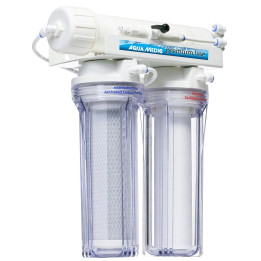
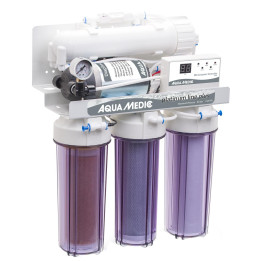

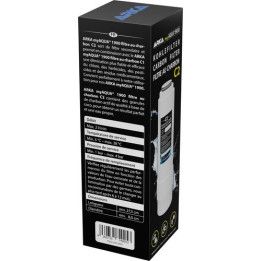

ARKA myAqua190/380 - Fine & Carbon Filter Set, 1 pcs. of each
€16.90
Rated out of 5 stars based on
review(s)