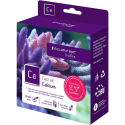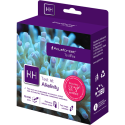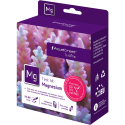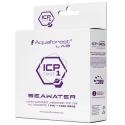
Water tests: electronic or drop test?
Aquarium Water Testing: Digital or Liquid Test Kits?
Water testing is one of the most essential practices in maintaining a saltwater aquarium. Without accurate measurements, it is very difficult to understand what is happening in the system. Beginners often face the choice between digital testing devices and traditional liquid test kits. Both options have their strengths and limitations.
Why water testing is essential
A saltwater aquarium is a delicate system where even small changes can affect marine life. Regular testing helps:
- monitor the nitrogen cycle
- control nutrients
- support coral growth
- detect problems early
Without testing, you are essentially guessing.
Key parameters to measure
Commonly tested parameters include:
- ammonia
- nitrite
- nitrate
- phosphate
- pH
- calcium, alkalinity, and magnesium
Maintaining these values is crucial for stability.
Liquid test kits
Liquid test kits use chemical reactions. Reagents are added to a water sample, causing a color change that is compared to a reference chart.
Advantages include:
- affordable cost
- wide availability
- no electronics required
They are ideal for beginners and routine testing.
Challenges of liquid kits
The main drawback is subjective reading. Color differences can be subtle and influenced by lighting.
Other issues include:
- variation between users
- longer testing process
- limited precision
Results may slightly differ each time.
Digital testing devices
Digital testers use sensors or photometric analysis to provide numerical results.
Examples include:
- digital nitrate and phosphate meters
- continuous pH monitors
- automated analysis systems
They remove guesswork from measurement.
Benefits of digital testing
The main advantage is accuracy and clarity.
Benefits include:
- objective results
- higher precision
- faster readings
- easier tracking of changes
They are especially valuable in reef systems.
Drawbacks of digital testing
Cost is the main disadvantage. Equipment and reagents can be expensive.
Additionally:
- some require calibration
- maintenance is needed
- not all parameters can be measured with one device
This can be more complex for beginners.
Which one should you choose
The best option depends on your needs.
Liquid test kits are ideal for:
- beginners
- general monitoring
- budget setups
Digital testers are better for:
- precise control
- advanced reef systems
- experienced hobbyists
Many aquarists use both methods together.
Combining both approaches
The most practical approach is to combine them.
For example:
- use liquid kits for routine checks
- use digital testers for critical values like phosphate
This balances cost and accuracy.
Summary
Both liquid and digital tests have important roles in a saltwater aquarium. Liquid kits provide affordability and simplicity, while digital tools offer precision and convenience.
At Akvaariokeidas, you can find a full range of testing solutions and expert advice to help you choose the best approach.
Share this content